

This talk situates Nicolás Maduro’s Venezuela in a broader narrative of authoritarian consolidation, where elite loyalty, military ties, and narco-patronage networks created a coup-proofed state that survived repeated internal and external pressures. Against that backdrop, this talk assessed why the U.S. chose a dramatic military operation to seize Maduro, why it now engages Delcy Rodríguez rather than a figure from the democratic opposition, and what strategic motivations might shape “what comes next.”
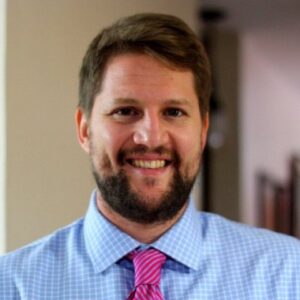
Who: Professor John Polga-Hecimovich, Dept Political Science, United States Naval Academy, Anapolis
When: Thursday February 12, 2026 | Reception: 5:30pm | Presentation: 6:00pm
Where: Flanders Market
About the Speaker:
John Polga-Hecimovich is an Associate Professor of Political Science a the U.S. Naval Academy, where he teaches courses on comparative politics and Latin American politics.
His research focuses on the effects of political institutions on democratic stability, policymaking, and governance, with a particular focus on Latin America. One of his primary areas of interest is how the executive branch of government exercises power and how presidents interact with legislatures and their own bureaucracies.
He has given briefings to the US State Department, the Defense Intelligence Agency, and US Southern Command on issues related to Latin American politics, and served as electoral systems expert for the Organization of American States (OAS) electoral observation team in Ecuador. In addition, he has participated in working groups examining Venezuela’s political crisis for the Council on Foreign Relations, the Woodrow Wilson Center, the United States Institute of Peace, and the Atlantic Council.
He has recently co-edited a volume on Venezuela, Authoritarian Consolidation in Times of Crisis: Venezuela under Nicolás Maduro.